
The world’s most widely used quality management standard has just received its first major update in almost a decade. Trusted by over a million organizations globally — from startups to massive multinational corporations — the newly launched ISO 9001:2026 is designed to reflect the rapidly changing world we operate in today.
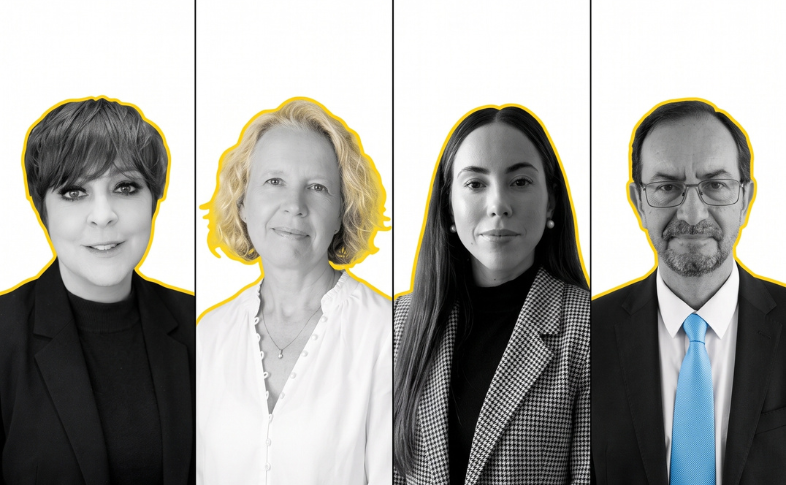
We recently tuned into the official press conference hosted by Katie Clift, Head of Public Relations at ISO, to hear directly from the leaders who shaped this revision.
Watch the full press conference below:

A Global Conversation Built on Collaboration
When we think about quality standards, it’s easy to immediately picture documentation and audits. However, Sam Somerville, Chair of ISO/TC 176 and Convener of the revision’s working group, emphasizes that quality is built through conversation.
This revision was a monumental global effort spanning nearly three years. Over 150 experts from 67 countries and 21 liaison organizations debated and shaped the future of the standard. Their goal? To modernize ISO 9001 for today’s economic context while preserving the foundational principles that have supported businesses for nearly 40 years.
What’s Actually Changing in 2026?
According to the panel, the core principles of quality — like leadership and continual improvement — remain exactly the same. However, several critical updates have been made to help businesses clarify their focus and intent:
-
Key Terms and Definitions: For the first time, these are included directly within the standard to ensure a unified global language.
-
Annex A: A new addition providing vital clarification on the intent behind the requirements, ensuring users understand the “why” as much as the “what.”
-
Quality Culture & Ethical Behavior: The standard now places a heavier emphasis on a culture driven by leadership — doing the right thing simply because it is the right thing to do.
-
Separating Risks and Opportunities: Previously, opportunities were often viewed merely as byproducts of risk. The new standard enforces a clear distinction, ensuring businesses actively seek out growth and improvement opportunities.
Moving “Beyond Conformity, Towards Excellence”
Isabella Santosh, Compliance Manager at global engineering consultancy Cundall, perfectly summarized the shift in modern quality management: it’s moving from simply detecting problems to actively preventing them.
“It’s not just about doing the basics right; it’s about continuously improving and pushing the boundaries of what good looks like,” Santosh explained. She noted that ISO 9001:2026 should never be relegated to a single department or treated as a box-ticking exercise for an audit. Instead, it serves as the ultimate “backbone” for an Integrated Management System — sharing elements like risk assessment, document control, and management reviews with other standards like Environmental (14001) and Information Security (27001).
Relevant for Everyone — Especially SMEs
A common misconception is that ISO standards are only for large corporations. The panel was quick to dispel this. For micro, small, and medium enterprises, having a tried-and-tested framework like ISO 9001 is an incredible asset for building trust and scaling a startup reliably.
To support this transition, ISO is also developing ISO 9002 (guidelines for applying 9001) and an updated ISO 9001 Handbook for Small Enterprises.
The Final Takeaway
Quality is not a final destination; it’s a way to travel. As ISO Secretary-General Sergio Mujica closed the session:
“I would like to invite everyone to embrace the philosophy of ISO 9001. It’s a philosophy about excellence, about quality, about trust. And this is what the world really needs now.”