AI can produce a draft, summarize a document and suggest an answer in seconds. For business owners and teams, that raises a bigger question: what people skills are needed when technology takes on more of the work?
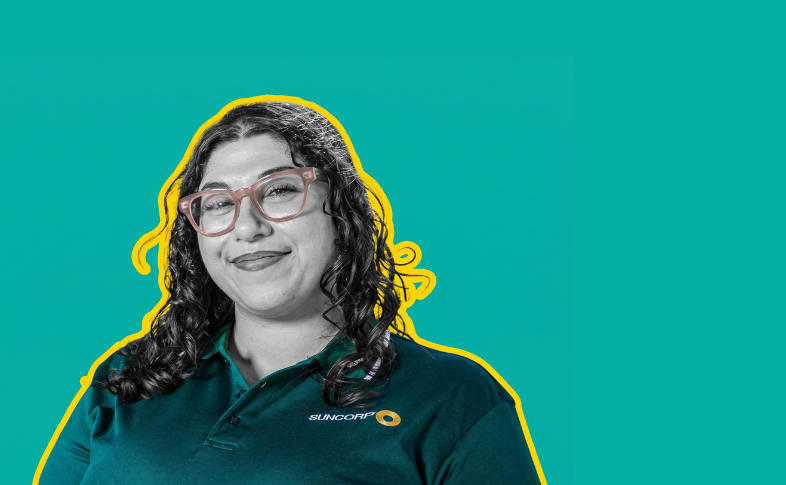
Manelle Issa, Digital Capability Manager at Suncorp Group, explores the human skills that matter in an AI-enabled workplace. Her message centers on an adaptable mindset, higher-order thinking and the ability to connect AI outputs with the context of real work.
For growing businesses, these ideas have practical implications. Introducing AI means developing the people who will use it, question it and decide whether its work is good enough.
Build a mindset that can change
Issa describes the need for a “malleable mindset”: a willingness to explore unfamiliar territory, learn and adapt.
That sounds straightforward until a new tool changes a task your team has spent years mastering. Learning can be uncomfortable. People may feel slower before they feel more capable, and yesterday’s useful approach may need revisiting.
An adaptable mindset creates room for that discomfort. It allows someone to say, “I don’t understand this yet,” and then investigate.
For a business, this means giving people opportunities to experiment with approved tools, discuss what they discover and ask questions without feeling they should already know the answers.
The aim is to build confidence in learning as the tools evolve.
Make critical thinking part of the work
An AI response can sound convincing. That alone does not establish that it is accurate, relevant or suitable for your business.
People need to ask:
- What supports this answer?
- What assumptions has it made?
- What information is missing?
- Does it fit our requirements and circumstances?
- What needs checking before we use it?
Consider an AI-generated customer response. It might be well written while promising something your business cannot deliver. Someone needs to check the substance against your policies, service commitments and the customer’s situation.
That check works best when it is an explicit part of the process, with a clear owner and clear criteria.
Think about how you are thinking
Issa also highlighted metacognition: thinking about your own thinking.
In everyday work, this means noticing how you arrive at a conclusion. Did you accept the AI’s recommendation because it made sense, because it confirmed your existing view, or because you were in a hurry?
A useful pause is to ask yourself: “What would make me change my mind?”
You can also ask AI to identify assumptions, offer alternative interpretations or highlight weaknesses in a proposed approach. Those responses give you more material to examine; you still need to evaluate them.
This habit helps people participate actively in the work instead of simply accepting the first plausible answer.
Bring the context that makes an answer useful
One of Issa’s most memorable metaphors was “threading the needle”.
Getting the thread through the eye of the needle prepares you to stitch. The value comes from what you connect and create afterwards.
The same idea applies to AI. Generating an answer is a starting point. People then connect it with their experience, the business’ objectives and the realities of the situation.
Imagine AI drafting a supplier assessment. An experienced team member may recognize that a missing document needs follow-up, that a requirement has changed, or that an exception needs approval. Their knowledge helps turn the draft into a useful decision.
This is why subject-matter expertise matters. People need enough understanding of the work to recognize gaps, interpret implications and know when to seek another person’s judgement.
Give experimentation a purpose
Issa’s invites us to be curious, explore and experiment.
For a small or medium-sized business, a useful way to begin is to choose one recurring task with a clear purpose and an outcome you can review.
For example, try using AI to draft a procedure from approved source material. Before starting, decide what a good result should contain: accurate steps, clear responsibilities, relevant exceptions and appropriate review points.
Then have someone familiar with the work assess the draft. What did AI help with? What did it miss? How much correction was required?
Record those findings and use them to improve the next attempt. Experimentation becomes more useful when the team can learn from it together.
Leaders need to provide direction through uncertainty
What happens when employees are experimenting faster than the organization’s strategy can keep up?
Issa acknowledged the uncertainty and mental effort involved. She emphasized transparency, putting people first and leaders being open about not having every answer.
A practical implication for business leaders is to give teams a stable purpose even while the tools change. People need to understand the problem they are trying to solve, the boundaries they must work within and what a successful outcome looks like.
That direction helps experimentation contribute to the business. It also gives people a basis for deciding when to continue, change approach or stop.
Turn human judgement into a repeatable practice
In what ways can an organization encourage critical thinking to prevent the blind acceptance of AI-generated information?
Issa pointed to baseline knowledge, guardrails and the expertise of people who understand the relevant domain.
For business owners, this suggests making verification specific. “Check the AI’s work” leaves too much open to interpretation.
Define what must be checked, who is responsible, what evidence is needed and when an issue should be escalated. Build those requirements into the workflow so people can apply their judgement consistently.
AI skills extend well beyond writing prompts. Curiosity helps people discover possibilities. Critical thinking helps them assess outputs. Experience helps them interpret context. Clear processes help them put people skills to work.
As AI takes on more tasks, businesses have an opportunity to be more deliberate about where human judgement belongs — and how to support the people responsible for exercising it.